• Skip to main content
  • Skip to primary sidebar

Ask Liz Weston

Get smart with your money

  • About
  • Liz’s Books
  • Speaking
  • Disclosure
  • Contact

Saving Money

Myths about “death taxes” lead to costly mistakes

December 3, 2012 By Liz Weston

Dear Liz: You recently answered a question about capital gains taxes that stemmed from two siblings selling their parents’ home. The children had been added to the parents’ deed, presumably before the parents’ death. You mentioned that the capital gains tax would have been avoided if the parents had bequeathed the home rather than gifting it during their lifetimes. Presumably bequeathing the home at death would have necessitated probate and incurred inheritance taxes. Are these costs more than offset by the stepped-up tax basis received?

Answer: Your questions illustrate exactly why no parent should add a child (or anyone else) to a home deed without discussing the issue with an estate-planning attorney first. Too often, laypeople misunderstand what’s involved in probate and make expensive mistakes trying to avoid it.

In some states, probate — the court process that typically follows death — is relatively swift and not very expensive. Trying to avoid it isn’t necessarily cost effective. In other states, including California, the process potentially can take many months and eat up a good chunk of an estate. When that’s the case, it can be prudent to take steps during life to sidestep probate at death.

There are often better ways to do so, however, than adding someone to a deed. A living trust, for example, can be a good way to avoid probate and preserve the tax benefits of bequeathing, rather than gifting, assets. Living trusts can vary in cost, but a lawyer can typically set one up for $2,000 or $3,000. If you compare that with the $25,000 or more the siblings will pay in capital gains on a relatively modest home sale, you can see that the living trust probably is a better deal.

Now let’s turn to the issue of estate taxes. If the assets left by the deceased are substantial enough to incur estate taxes, they will do so whether or not the estate goes through probate. Avoiding probate, in other words, does not avoid estate taxes. Currently, only estates worth more than $5.12 million face federal estate taxes. That limit is scheduled to drop next year to $1 million, but will still affect relatively few estates.

Filed Under: Estate planning, Q&A, Real Estate, Saving Money Tagged With: estate, Estate Planning, real estate, step-up in basis, Taxes

Get a lawyer’s advice before transferring home

December 3, 2012 By Liz Weston

Dear Liz: Your column on the tax issues that develop when parents deed their property to their children should help educate a lot of people. But sometimes this is done to reduce the parents’ assets so they will be eligible for Medicaid after the expiration of the look-back period. In this case, paying the capital gains tax is appropriate, because they are asking the state to pay potentially very large senior care bills.

Answer: Some would question whether it’s ever appropriate for seniors to deliberately impoverish themselves by transferring away assets in order to qualify for Medicaid, which pays long-term care expenses for the indigent. The “look back” period, in which states examine asset transfers before a Medicaid application, was established to discourage such maneuvers. Once again, it’s smart to get a legal opinion before transferring big assets. An elder-law attorney could weigh in on the pros and cons of Medicaid planning.

Filed Under: Estate planning, Q&A, Real Estate, Saving Money Tagged With: Estate Planning, estate plans, Medicaid, Medicaid look-back rules, real estate

Home sale tax break won’t disappear

October 1, 2012 By Liz Weston

Dear Liz: My wife and I are trying to sell our home, which has been our primary residence for six years. I am very concerned about the $500,000 capital gains exclusion. As I understand it, the exclusion would mean we wouldn’t have to pay taxes on our home sale profit. But we are confused about this exemption being tied to the “Bush tax cuts” that could expire Dec. 31. If we sell our home after that, could we lose the exemption?

Answer: No. The law creating a capital gains exemption for home sales went into effect May 6, 1997. It’s not tied to the tax cuts approved during President George W. Bush’s tenure that are set to expire at the end of the year.

So people who live in a home for at least two of the previous five years will still be able to avoid paying capital gains on their first $250,000 of home sale profit (or $500,000 for a married couple).

Another tax you likely won’t have to pay is a new 3.8% levy on what’s called “net investment income.” Some emails circulating on the Internet falsely claim that the tax, which is scheduled to kick in Jan. 1, is a real estate sales tax. In reality, it’s a potential tax on home sale profits that exceed the capital gains exemption limit, as well as on other so-called unearned income, including investment and rental income.

If your home sale profit doesn’t exceed the capital gains exemption limit, you won’t owe the new tax. If your profit does exceed the limit, the excess amount would be added to your adjusted gross incomes to determine whether you’d have to pay it. The 3.8% tax would be levied only on people whose adjusted gross incomes are more than $200,000 for singles and $250,000 for married couples.

Filed Under: Q&A, Real Estate, Saving Money, Taxes Tagged With: capital gains, Earned Income Tax Credit, home sale, real estate, Taxes

How to set up savings “buckets”

September 27, 2012 By Liz Weston

Dear Liz: You’ve written about how helpful it can be to have “savings buckets” or separate savings accounts earmarked for different goals such as vacations, property tax payments and so on. I have been trying to do this myself, but every bank I find charges so much in fees that it would cost more money than I would save. Either that, or they tie the savings accounts to a “free” checking account that has a high minimum balance. Can you please pass along any information about free savings accounts that have no minimum balance? I cannot use Internet banks because I cannot deposit cash when I have $5 or $10 in my pocket that I would take to the bank.

Answer: Actually, you can. Internet banks can be linked to your checking account at a brick-and-mortar bank. You can take your money to the bank, then transfer it to one of your savings accounts at the Internet bank. Unlike traditional banks, Internet banks such as ING Direct, Ally and FNBO don’t have balance minimums or monthly fees. You can set up several savings accounts without paying extra fees.

You still need a low-cost checking account, of course. You should be able to find one at a local credit union.

Filed Under: Q&A, Saving Money Tagged With: bank fees, banking, credit unions, Internet banks

What I learned from our “almost free” vacation

September 7, 2012 By Liz Weston

Back in June I wrote a post about “How to get free summer travel.” I’d arranged a 5-day trip with my daughter to the Pacific Northwest using a variety of rewards programs. The trip, which we took over Labor Day weekend, was a heck of a lot of fun. Like most vacations, it wound up costing a bit more than planned but I also learned a few things.

Including:

Re-price your reservations before you go. I checked both hotel and car reservations a few days beforehand to see if prices had dropped. They hadn’t at the Doubletree in Portland, which was in fact sold out. But the rates at Enterprise car rental fell like a rock. Plus, Enterprise emailed me a last-minute 10% off coupon for being part of its frequent traveler program. My cost for the two-day car rental went from over $100 to just $37. I love that.

Don’t try to make a same-day connection on Amtrak. We took the sleeper car up from Los Angeles, and the train fell waaaaay behind schedule–five hours, in fact. That was good news for us, since we got to see some gorgeous scenery around the California-Oregon border that would normally pass by in the dark. Passengers who were trying to make a connection to the Empire Builder, the train that goes from Portland to Chicago, weren’t so happy. They had to get off in Klamath Falls and ride several hours on a bus to meet the other train. If I were to book an Amtrak trip that involved a connection, I’d try to arrange it so that we had an overnight stay in between.

Portland’s public transportation is awesome. There was a light-rail MAX station right outside our hotel, and it took us everywhere we wanted to go while we were in town, including the Saturday Market and the zoo. A day pass for an adult was just $5. Parking at the zoo alone would have been $4, and a hassle, since there are limited spaces. When it was time to leave, I took the red line out to the airport to pick up our rental car–easy peasy.

Check out the artist/farmers markets. Speaking of the Saturday Market: I was blown away by many of the vendors there. This weekend market along the river features some really skilled craftsman offering handmade stuff at reasonable prices. I stocked up for Christmas.

Splurge a little. My daughter’s a huge fan of the Great Wolf Resort and its indoor water park south of Olympia. The rates in the summer can be steep, but my sister and I decided to split the cost of a Kid Cabin room with bunk beds. That way, we got to spend more time together, our kids had a ball and we were each out of pocket $160 rather than $320.

Peach fritter with cream cheese? Might want to skip that. My friend Michelle Rafter suggested we meet at VooDoo Donuts for a treat. Yes, the long wait was worth it, but no, I don’t think I’d order the peach fritter again–it was almost as big as my head. Next time it’ll be the maple bacon donut, for sure.

Filed Under: Liz's Blog, Saving Money Tagged With: Amtrak, frequent flyer programs, rewards cards, travel

Now available: My new book!

August 28, 2012 By Liz Weston

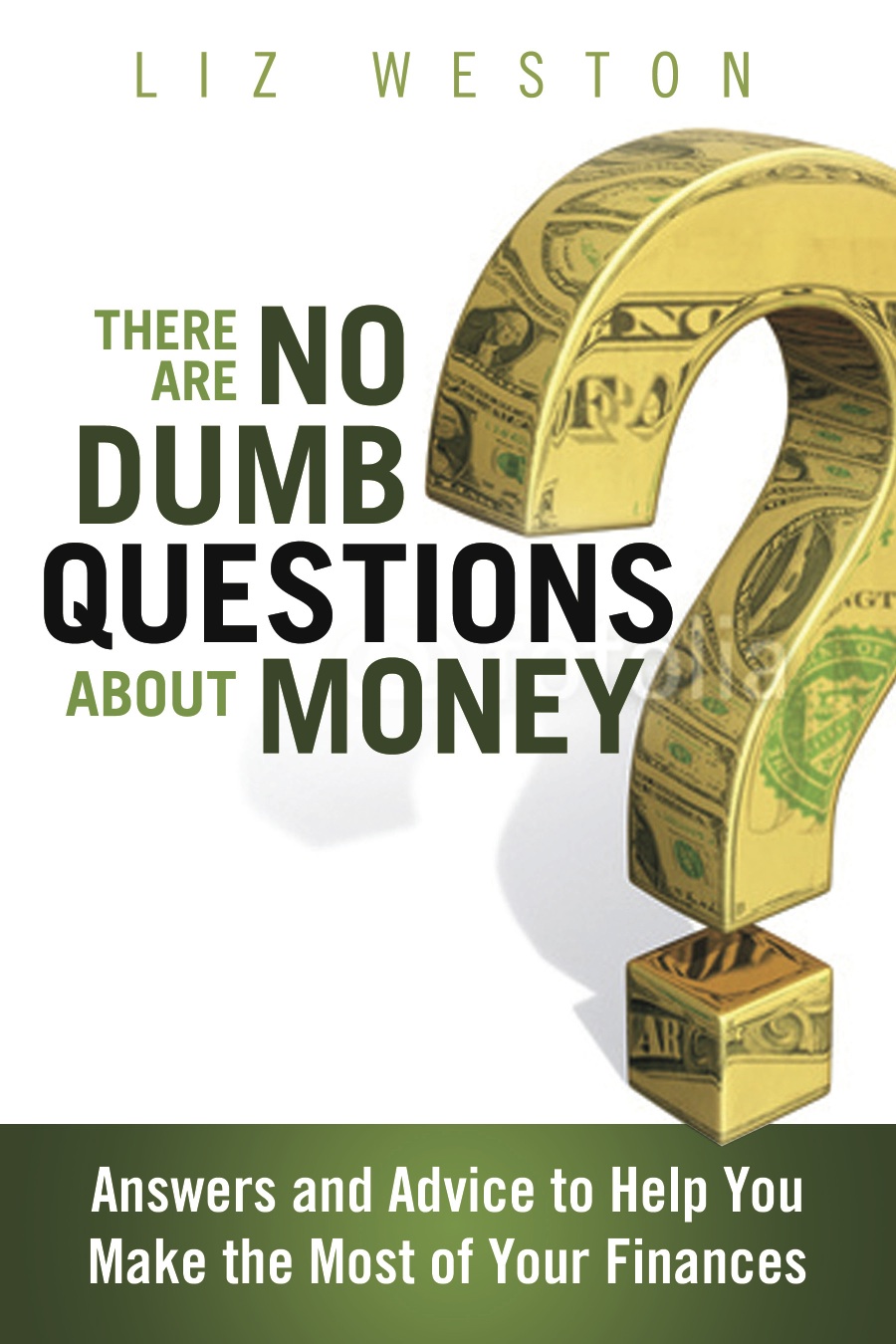
Do you have questions about money? Here’s a secret: we all do, and sometimes finding the right answers can be tough. My new book, “There Are No Dumb Questions About Money,” can make it easier for you to figure out your financial world.

I’ve taken your toughest questions about money and answered them in a clear, easy-to-read format. This book can help you manage your spending, improve your credit and find the best way to pay off debt. It can help you make the right choices when you’re investing, paying for your children’s education and prioritizing your financial goals. I’ve also tackled the difficult, emotional side of money: how to get on the same page with your partner, cope with spendthrift children (or parents!) and talk about end-of-life issues that can be so difficult to discuss. (And if you think your family is dysfunctional about money, read Chapter 5…you’ll either find answers to your problems, or be grateful that your situation isn’t as bad as some of the ones described there!)

Interested? You can buy this ebook on iTunes or on Amazon.

Filed Under: Annuities, Banking, Bankruptcy, Budgeting, College, College Savings, Couples & Money, Credit & Debt, Credit Cards, Credit Counseling, Credit Scoring, Divorce & Money, Elder Care, Estate planning, Financial Advisors, Identity Theft, Insurance, Investing, Kids & Money, Liz's Blog, Real Estate, Retirement, Saving Money, Student Loans, Taxes, The Basics Tagged With: 401(k), banking, Bankruptcy, Budgeting, college costs, College Savings, Credit Bureaus, Credit Cards, Credit Scores, credit scoring, Debts, emergency fund, FICO, FICO scores, financial advice, Financial Planning, foreclosures, Identity Theft, mortgages, Retirement, Savings, Social Security, Student Loans

  • « Go to Previous Page
  • Page 1
  • Interim pages omitted …
  • Page 11
  • Page 12
  • Page 13
  • Page 14
  • Go to Next Page »

Primary Sidebar

Search

Copyright © 2025 · Ask Liz Weston 2.0 On Genesis Framework · WordPress · Log in