• Skip to main content
  • Skip to primary sidebar

Ask Liz Weston

Get smart with your money

  • About
  • Liz’s Books
  • Speaking
  • Disclosure
  • Contact

Credit Scores

Now available: My new book!

August 28, 2012 By Liz Weston

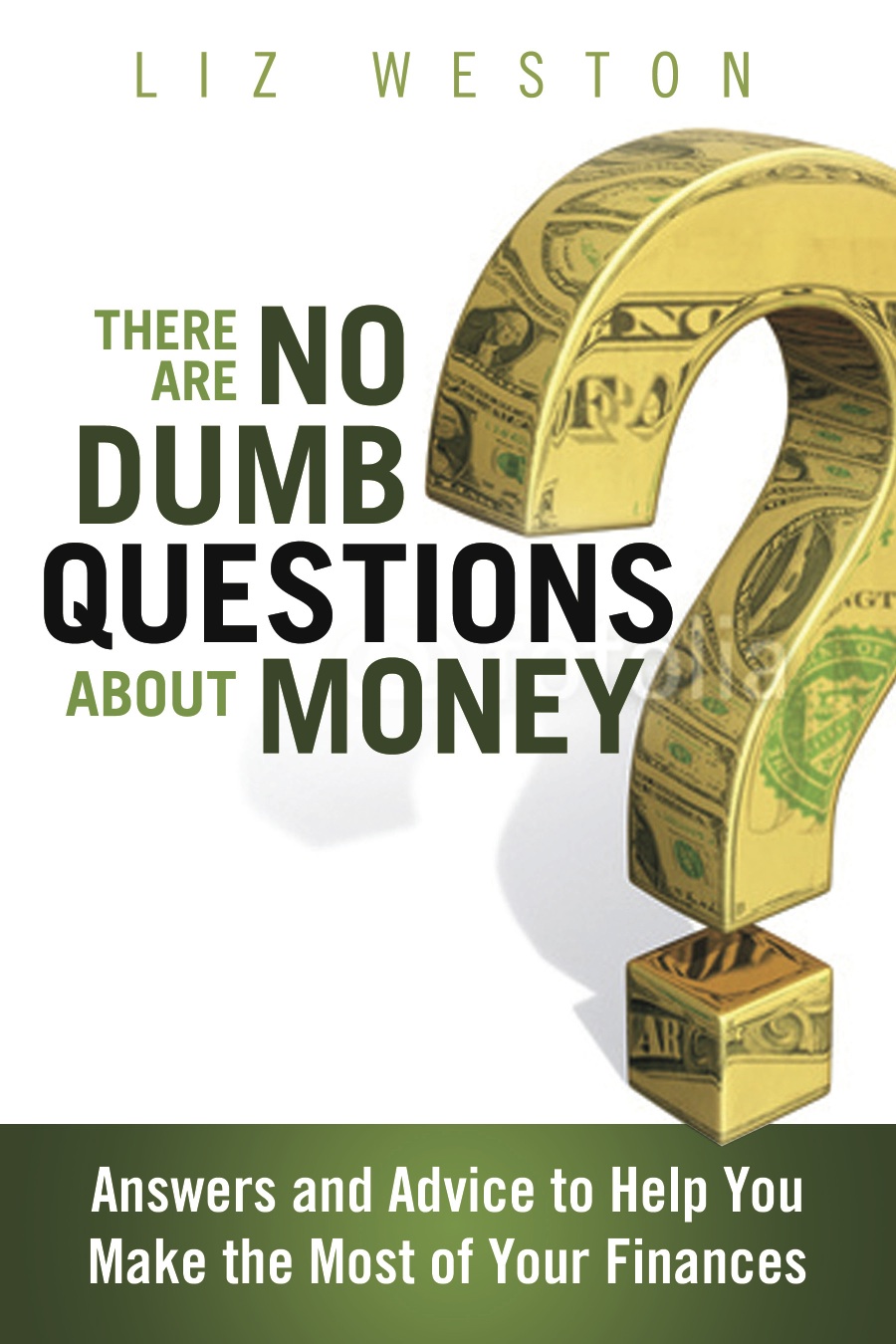
Do you have questions about money? Here’s a secret: we all do, and sometimes finding the right answers can be tough. My new book, “There Are No Dumb Questions About Money,” can make it easier for you to figure out your financial world.

I’ve taken your toughest questions about money and answered them in a clear, easy-to-read format. This book can help you manage your spending, improve your credit and find the best way to pay off debt. It can help you make the right choices when you’re investing, paying for your children’s education and prioritizing your financial goals. I’ve also tackled the difficult, emotional side of money: how to get on the same page with your partner, cope with spendthrift children (or parents!) and talk about end-of-life issues that can be so difficult to discuss. (And if you think your family is dysfunctional about money, read Chapter 5…you’ll either find answers to your problems, or be grateful that your situation isn’t as bad as some of the ones described there!)

Interested? You can buy this ebook on iTunes or on Amazon.

Filed Under: Annuities, Banking, Bankruptcy, Budgeting, College, College Savings, Couples & Money, Credit & Debt, Credit Cards, Credit Counseling, Credit Scoring, Divorce & Money, Elder Care, Estate planning, Financial Advisors, Identity Theft, Insurance, Investing, Kids & Money, Liz's Blog, Real Estate, Retirement, Saving Money, Student Loans, Taxes, The Basics Tagged With: 401(k), banking, Bankruptcy, Budgeting, college costs, College Savings, Credit Bureaus, Credit Cards, Credit Scores, credit scoring, Debts, emergency fund, FICO, FICO scores, financial advice, Financial Planning, foreclosures, Identity Theft, mortgages, Retirement, Savings, Social Security, Student Loans

Cash-only lifestyle can complicate getting credit

August 27, 2012 By Liz Weston

Dear Liz: My brother is 63, living on Social Security only and needs to obtain a credit card. He is old school and pays cash for virtually everything, but realizes he needs a credit card for some basics (renting a car, for example). If he has only $17,000 income a year, would that be enough to qualify him for a basic credit card from any provider? If not, do you have any suggestions for emergencies where a credit card would normally be required?

Answer: Some people use debit cards or prepaid cards in situations where credit cards are typically accepted. But gas stations, hotels and some other merchants can put a “block” or hold on an account for more than the amount being charged. That can limit the user’s access to the rest of the money in their checking account or on their prepaid card for several hours or even days. Also, debit and prepaid cards have fewer consumer protections than credit cards.

The biggest problem your brother faces in getting a regular credit card is his habit of paying with cash. He may not have enough of a credit history to generate a credit score, and most card issuers rely heavily on scores in evaluating applications. He should consider visiting MyFico.com and see if he can buy one of his FICO scores for $20. If he doesn’t have FICOs, he may want to consider a secured credit card.

A secured card gives him a credit line equal to a deposit he makes at the issuing bank. NerdWallet, an online financial site that evaluates credit cards, recommends the U.S. Bank Secured Visa Card, which has a low $35 annual fee and security deposits ranging from $300 to a respectable $5,000. Another option is the Capital One Secured Card, which has a lower annual fee of $25 but a credit limit of just $200.

Using a secured card lightly but regularly, and paying off the balance in full every month, can help your brother build credit scores that eventually will be high enough to qualify for a regular card.

Filed Under: Credit & Debt, Credit Scoring, Q&A Tagged With: Credit Cards, Credit Scores, credit scoring, FICO, FICO scores, secured card

Why high credit scores take longer to heal

August 20, 2012 By Liz Weston

Dear Liz: I am confused about your recent article about a person who did a short sale and questioned its effect on her credit. You said that if she started with a score of 680, it would take about three years for her FICO numbers to return to normal. You then said, “If your scores were high, say 780, it would take about seven years to restore them to their old peaks.” This doesn’t make sense to me. Why would it take longer to recover if you started with better credit?

Answer: Think of credit scores as a mountain that gets steeper the higher you climb. Not only does it take longer to achieve the lofty peaks, but if you tumble down the mountain, it will take you longer to return to those peaks than to achieve some intermediate stage.

The FICO formula is designed to reflect your likelihood of default. If you’ve recently missed a payment, had a bill go to collections or had a foreclosure or short sale, the formula assumes you’re much more likely to default on another bill than someone who doesn’t have those black marks on his or her record, and your scores fall to reflect that higher risk of default. As time passes and you handle credit responsibly, your scores will begin to slowly rise, but it will take more time to regain your peak scores if they were high.

Something else to understand is that the penalty for most negative credit events is greater for people with high scores than those with lower scores. Missing a single payment can knock up to 110 points off a 780 score but might deduct just 60 points from a 680 score. That’s because a higher risk of default is already “baked in” to the lower score. The higher score presumes you’re less likely to default. If you do miss a payment, the formula is set up to punish you more. In most cases, though, you won’t “fall down the mountain” as far as someone who started with a lower score. After the missed payment, the 780 score could be 670, while the 680 score could be 620.

Filed Under: Credit & Debt, Credit Scoring, Q&A Tagged With: Credit Scores, credit scoring, FICO, FICO scores

Will her bad credit prevent him from getting a mortgage?

August 6, 2012 By Liz Weston

Dear Liz: Is it possible for me to buy a home without having my wife on the mortgage? She lost her business because of the recession. I do not want to deal with her creditors.

 Answer: You can apply for a mortgage based solely on your own income, credit scores and debt-to-income ratio, if those are sufficient to buy the house you want. Your wife’s income and credit does not have to be considered.

If you can’t swing the purchase without her income, though, you’ll both need to spend some time improving her credit scores. That might include adding her as an authorized user to your credit cards. Another option is to negotiate settlements with her creditors in return for their deleting the collection accounts from her credit reports. You’d want to be cautious in these negotiations, especially if the statute of limitations on the debts hasn’t expired and your wife could be sued. Consider visiting DebtCollectionAnswers.com for help in negotiating with creditors.

Filed Under: Couples & Money, Credit & Debt, Q&A, Real Estate Tagged With: Credit Scores, credit scoring, FICO, FICO scores, mortgages

Short sales, foreclosures have similar effect on credit scores

July 23, 2012 By Liz Weston

Dear Liz: I went through a divorce in the last year after being separated for two years. During our separation, we closed credit cards with high balances to make sure neither party would spend more on credit. We also had to short sell our home. So, as a single woman in her mid-30s, I have credit that’s somewhat shot for now. How many months should I expect the short sale to affect my credit scores? And was closing the credit card accounts good or bad for my credit?

Answer: Closing credit accounts can’t help your credit scores and may hurt them. In a divorce, however, it’s usually wise to close all joint accounts. Otherwise, your credit rating is in the hands of your ex-spouse, who could trash your scores by paying accounts late or maxing out credit lines.

In any case, the short sale probably had a much greater effect on your credit than the account closures. Short sales typically damage your credit as much as a foreclosure, according to the company that created the leading FICO credit score. Recovery times are measured in years, not months. If your scores weren’t that high to begin with — say 680 in the 300-to-850 FICO scale — it would take about three years for your numbers to return to their old levels. If your scores were high, say 780, it would take about seven years to restore them to their old peaks.

These recovery times assume you handle credit responsibly from now on. That means having and lightly using a credit card or two, making all payments on time and ensuring no account goes to collections.

Filed Under: Credit & Debt, Credit Scoring, Divorce & Money, Q&A, Real Estate Tagged With: Credit Cards, credit score recovery, Credit Scores, credit scoring, Debts, FICO, FICO scores, foreclosure, foreclosures, short sales

There’s more than one way out of credit card debt

July 2, 2012 By Liz Weston

Dear Liz: In your book “Your Credit Score,” you note that one of the best ways to improve your credit score and lighten your credit card load is to get a personal loan with a credit union and pay it off in installments.

I have two high-interest credit card balances that are hovering right near my credit limits (a little over $15,000 total) that comprise the vast majority of my debt. I’d love to get an installment loan to pay them off, but I’ve applied several times and several places for personal loans — including my credit union — and have either been denied or not given a sufficient loan to cover the total amount. I also don’t have $15,000 in cash sitting around in a savings account to secure a loan of that size.

In this situation, what would you recommend? The minimum payments on these two cards are roughly $190 and $160 each, and I’d love to be able to combine them and maybe even save a few bucks too.

Answer: What you seem to be talking about is a secured personal loan, rather than one that’s unsecured. Secured personal loans typically require that you have an equivalent amount in a bank account or certificate of deposit as collateral for the loan. If you have the cash, though, you wouldn’t need the loan — you could use the money to pay off your debt.

Unsecured personal loans don’t have collateral. The bank or credit union is relying on your word that you’ll repay the loan. Not surprisingly, lenders can be pretty picky about whose word they will trust. Few will take a risk on borrowers with poor credit scores — and those maxed-out cards, accompanied by all those loan applications, aren’t helping yours.

For now, give up the idea of getting a loan. Instead, take whatever cash you have to pay down the cards as far as you can. Retain $500 or so as an emergency fund, but put the rest to use in eliminating this high-rate debt.

Next, start cutting expenses so you can free up more money to repay your debt. Do you eat out? Cut back. Pay for TV? Ditch the cable. Take vacations? Stay home for a while. None of these sacrifices has to be more than temporary, as long as you’re willing to stop adding to your debt.

Paying credit card debt is a lot like losing weight. If you don’t make much effort, you won’t get much result. But sending in big payments each month will help you see progress pretty quickly, which can inspire you to keep going.

Once you’ve got the debt paid off, don’t charge more on the cards than you can afford to pay off each month.

Filed Under: Credit & Debt, Q&A Tagged With: Credit Cards, Credit Scores, credit scoring, credit unions, debt, Debts, FICO, FICO scores, installment loans

  • « Go to Previous Page
  • Page 1
  • Interim pages omitted …
  • Page 28
  • Page 29
  • Page 30
  • Page 31
  • Page 32
  • Go to Next Page »

Primary Sidebar

Search

Copyright © 2025 · Ask Liz Weston 2.0 On Genesis Framework · WordPress · Log in