• Skip to main content
  • Skip to primary sidebar

Ask Liz Weston

Get smart with your money

  • About
  • Newsletter
  • Liz’s Books
  • Speaking
  • Disclosure
  • Contact

wills

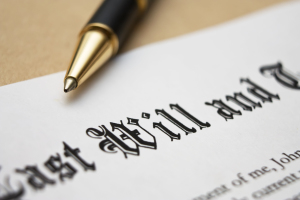
Q&A: Why setting up a living trust may be wise, especially in California

January 8, 2018 By Liz Weston

Dear Liz: Is there a minimum amount of assets required before a revocable living trust is advisable? I am retired but my wife is still working. If we do not include our 401(k) plans, our total liquid assets (my wife’s monthly salary, my monthly Social Security benefit and my pension check) are below $100,000. We do not own a house or other real estate and do not have any major outstanding loans. We own our only car, a 2009 non-luxury vehicle.

Assuming we need a trust, do we still need to make out a will? If so, can we use a state-specific form online or just make out a handwritten will? Lastly, can a will be “until further notice” or do we have to update it each year? It should be obvious that we are trying to save expenses where we can.

Answer: Living trusts allow estates to avoid probate, the court process that otherwise oversees the paying of creditors and distribution of someone’s assets. (The sources of income you listed aren’t considered assets, by the way, since those will cease upon your deaths and can’t be transferred to other heirs.) Living trusts offer privacy, because probate is a public process, and can make it easier for a designated person to take over for you if you should become incapacitated.

There’s no specific dollar amount of assets for which a living trust becomes a good idea. In many states, probate isn’t a big deal, while in others — including California — probate is expensive enough that the cost of setting up a living trust can be worthwhile. Even in California, smaller estates (those under $150,000) can avoid probate or qualify for a streamlined process that can make living trusts unnecessary.

Those with larger estates may be able to avoid probate using other methods.

The money in your 401(k)s, for example, will pass directly to the beneficiaries you name. In many states, you also can name a beneficiary for a vehicle right on the registration form so your car could avoid probate. Some states also offer this “transfer on death” option for real estate.

“Plan Your Estate,” an excellent primer from self-help legal publisher Nolo, details your options.

Living trusts typically replace the need for a will, although a lawyer likely would recommend creating a “pour-over” will to include any assets accidentally left out of the trust. If you don’t have a living trust, you’ll definitely need wills to outline how you want your property distributed.

You also should create powers of attorney for healthcare and for finances, so that someone you name can make decisions for you should you become incapacitated. These documents are probably more important than a will because they can determine your quality of life at the end of your days rather than just what happens to your stuff when you’re beyond caring.

Do-it-yourself options are fine if your estate is small, simple and unlikely to be challenged by contentious heirs. Each state has specific requirements for making a legal will, which will be detailed in the software or online forms you use. You don’t have to update a will yearly but it’s a good idea to at least review your estate documents annually to see if any changes might be needed.

Filed Under: Estate Planning, Q&A Tagged With: Estate Planning, living trust, q&a, wills

Wednesday’s need-to-know money news

November 9, 2016 By Liz Weston

Zemanta Related Posts ThumbnailToday’s top story: Probate, and how to avoid it. Also in the news: A Class of 2016 Postgrad student loan checklist, how to haggle down your rent by offering to do your own maintenance, and a few things to consider before moving to Canada.

Probate, and How to Avoid It
Learn the three common ways.

Class of 2016 Postgrad Student Loan Checklist
Get ready to start paying back those loans.

Haggle Down Your Rent By Offering to Do Your Own Maintenance
All they can say is no.

6 reasons to think twice before moving to Canada
Some things to consider.

Filed Under: Liz's Blog Tagged With: Canada, Estate Planning, Probate, rent, Student Loans, tips, wills

Friday’s need-to-know money news

August 5, 2016 By Liz Weston

W-2 Tax heroToday’s top story: Mistakes that could result in a tax penalty. Also in the news: The hidden dangers of not having a will, how to divorce your joint checking account, and what the real value of $100 is in each state.

7 Mistakes that May Result in a Tax Penalty
How to avoid them.

5 Hidden Dangers of Not Having a Will
Time to get your affairs in order.

How to Divorce Your Joint Checking Account
Tying up loose ends.

The Real Value of $100 in Each State
what’s it worth in your state?

Filed Under: Liz's Blog Tagged With: checking account, Estate Planning, joint checking account, money and divorce, tax penalty, Taxes, will, wills

Q&A: Clash over the state of their mother’s estate

July 18, 2016 By Liz Weston

Dear Liz: My husband’s mother passed away in January. His younger sister was executor of the estate. His mother had investments of close to $1 million prior to 2008. She supposedly lost half her investments with the downturn. When she passed away, my husband’s sister said that there was nothing left in the estate. What documents can he ask to see in order to make sure the estate is totally depleted? There wasn’t even a will shown to him.

Answer: If your mother-in-law had a will, or if she died “intestate” — without any estate planning documents — the sister would be required to open a probate case to settle the estate. Probate proceedings are public so your husband would be able to see an accounting of what’s left.

If your mother-in-law had a living trust, the sister wouldn’t have to open a probate case but she may be required to provide trust documents and an accounting of the estate to beneficiaries and heirs. The exact rules depend on the state where your mother-in-law died.

If the sister balks at providing this information, your husband may need to take her to court. He’d be smart to consult an attorney familiar with the relevant state’s laws.

Filed Under: Estate Planning, Q&A Tagged With: Estate Planning, q&a, trust, wills

Friday’s need-to-know money news

May 6, 2016 By Liz Weston

Zemanta Related Posts ThumbnailToday’s top story: Checking your credit doesn’t hurt your scores. Also in the news: Personal finance tips from NerdWallet moms, why you should prepare now for the death of a spouse, and the benefits of easing into a new savings budget.
Checking Your Credit Doesn’t Hurt Your Scores
Not checking your scores could hurt much more.

NerdWallet Moms Share Their Personal Finance Tips
Sharing lessons learned.

Why You Should Prepare Now for the Death of a Spouse
Making things easier down the road.

Boost Your Savings By 1% At a Time to Slowly Adjust to a New Budget
Easing into a new budget spares you from a shock to the system.

Filed Under: Liz's Blog Tagged With: budget, Credit, Credit Scores, Estate Planning, Savings, tips, wills

Friday’s need-to-know money news

April 29, 2016 By Liz Weston

Wills-in-TexasToday’s top story: Ranking the cheapest cars to insure. Also in the news: Why you need to have a will, the financial perks of downsizing, and how much money you need to save monthly to reach your retirement goal.

Ranking the Cheapest Cars to Insure
Being a smart shopper.

Prince Had No Will, Reports Say — But You Should
Don’t let the government inherit your estate.

The Financial Perks of Downsizing
Going small can mean a bigger bank balance.

This Retirement Calculator Tells You How Much to Save Monthly to Reach Your Goal
How close are you?

Filed Under: Liz's Blog Tagged With: auto insurance, cars, downsizing, Estate Planning, Retirement, retirement savings, wills

  • « Go to Previous Page
  • Page 1
  • Page 2
  • Page 3
  • Page 4
  • Page 5
  • Page 6
  • Go to Next Page »

Primary Sidebar

Search

Copyright © 2026 · Ask Liz Weston 2.0 On Genesis Framework · WordPress · Log in