• Skip to main content
  • Skip to primary sidebar

Ask Liz Weston

Get smart with your money

  • About
  • Newsletter
  • Liz’s Books
  • Speaking
  • Disclosure
  • Contact

income tax

Q&A: What’s the most tax efficient way to donate your RMD?

November 2, 2026 By Liz Weston Leave a Comment

Dear Liz: My wife and I are in our 70s and receive required minimum distributions from IRAs. We make our charitable contributions out of our RMDs. We have considered a donor advised fund. Which vehicle provides the best tax savings?

Answer: You would typically get the most tax benefit from qualified charitable distributions, which allow people 70½ and older to contribute money to charities directly from their IRAs. QCDs can satisfy required minimum distributions without increasing your adjusted gross income. That, in turn, can mean less taxation of your Social Security benefits and may help you avoid or reduce income-related surcharges on your Medicare premiums.

QCDs must go directly from your IRA custodian to the charity. A check issued by the custodian and payable to the charity can qualify even if you deliver it. It’s not a QCD if you receive the distribution and then pay the charity yourself.

Donor-advised funds work differently. You contribute cash or securities to the fund and may qualify for a tax deduction if you itemize. The contributions can grow tax-free until you direct the fund to make grants to eligible charities, potentially years later.

You can’t make QCDs to donor-advised funds, but these can be useful if you want to make several years’ worth of charitable contributions at once or donate appreciated securities. Donating those investments rather than selling them can avoid capital gains taxes.

For annual charitable giving from your IRAs, however, QCDs are likely the better choice. Talk to your tax pro about how to make sure your donations meet the QCD rules.

Filed Under: Q&A, Taxes Tagged With: capital gains, income tax, IRMAA, medicare premiums, Required minimum distributions (RMDs), tax deductions, traditional IRA

Q&A: Seniors may not have to file tax returns

February 17, 2026 By Liz Weston

Dear Liz: I disagree with the tax advice you gave to the 85-year-old lady and her husband, age 87, who hadn’t filed a tax return in the last three to five years. Maybe their combined income is so low they don’t have to file. Did you consider that? If not, you should. Not everyone needs a tax adviser to add two Social Security income forms together and determine that, “No, hon, we don’t have to file.”

Answer: That was actually my first thought. But the fact that the writer said her spouse hadn’t “paid” their income tax in several years indicates they may have owed taxes prior to that point, and that filing tax returns had been routine.

Many people in their 80s don’t have to file federal tax returns because their income is too low. For the 2025 tax year, singles 65 and over with gross incomes under $15,750 don’t need to file. The limit is $31,500 if one member of a married couple is 65 or older and $34,700 if both spouses are 65 or older.

But it would be dangerous and irresponsible to assume that just because someone is older, they no longer owe taxes. The free Tax-Aide service mentioned in the previous column can assess the couple’s situation and provide reassurance if they don’t need to file or help if they do.

Filed Under: Q&A, Taxes Tagged With: filing tax returns, income tax, tax returns

Q&A: Income tax vs. capital gains tax

March 28, 2016 By Liz Weston

Dear Liz: I was wondering about the disabled vet who wanted to sell his home, which had increased in value by about $1 million. You mentioned that “[S]ingle people with incomes over $415,050 in 2016 are subject to the 39.6% marginal tax rate. Most people pay capital gains tax at a 15% rate, but those in the top bracket face a 20% rate.” Would he have to pay federal income tax on the non-exempt portion of the equity as well as paying 20% capital gains on the non-exempt portion?

Answer:
You may pay income tax or capital gains tax on a source of income, not both. If an investment has been held less than a year, the gain is considered short term and subject to income tax. Investments held more than a year are considered long-term and qualify for capital gains treatment.

When you’re selling your primary residence, the first $250,000 in profit is typically exempt from tax. The rest of the gain would be taxed as a capital gain.

Filed Under: Q&A, Taxes Tagged With: capital gains tax, income tax, q&a, Taxes

Monday’s need-to-know money news

March 7, 2016 By Liz Weston

returnToday’s top story: What retirees need to know about the new Social Security deadline. Also in the news: States with no income tax, tax breaks for getting older, and why you need an “Armageddon Fund.”
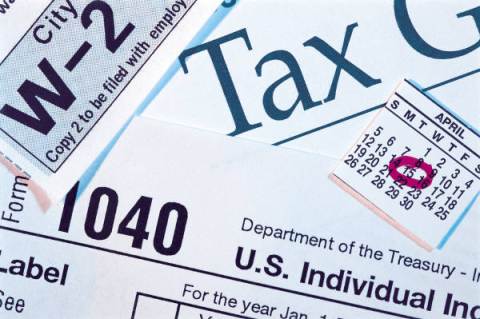
What Retirees Need to Know About the New Social Security Deadline
Consider your options carefully.

U.S. States With No Income Tax
In case your recent tax fillings have put you in a relocating mood.

​Get tax breaks just for getting older
With age comes wisdom AND tax breaks.

Create an “Armageddon Fund” to Save for a Major Emergency and Still Earn Interest
Your emergency fund just got scarier.

Filed Under: Liz's Blog Tagged With: Armageddon fund, emergency fund, income tax, Retirement, Savings, Social Security, tax breaks, Taxes

Tuesday’s need-to-know money news

December 8, 2015 By Liz Weston

taxesToday’s top story: The biggest income tax changes for 2016. Also in the news: What you wish you could tell your younger self about money, avoiding “skip a payment” holiday offers, and how to make a better money plan for the new year.

10 biggest income tax changes to plan for in 2016
Prepare yourself.

11 Finance Tips You Wish You Could Tell Your Younger Self
If you could turn back time.

Beware Credit Card “Skip a Payment” Holiday Offers
Don’t fall in a debt trap.

5 Ways to Make a Better Plan for Your Money in 2016
It’s all about planning.

Filed Under: Liz's Blog Tagged With: Credit Cards, financial plan, income tax, tax changes, Taxes, tips

Primary Sidebar

Search

Copyright © 2026 · Ask Liz Weston 2.0 On Genesis Framework · WordPress · Log in