• Skip to main content
  • Skip to primary sidebar

Ask Liz Weston

Get smart with your money

  • About
  • Liz’s Books
  • Speaking
  • Disclosure
  • Contact

Credit & Debt

How to help a friend with big debts

October 15, 2012 By Liz Weston

Dear Liz: I have a friend who owes $30,000 in credit card debt. I suggested he see a financial advisor who can help him to get out of this situation, but he never finds the time to do it. He pays all his bills on time, but only the minimum required, and there’s nothing left for him to save for his old age. He has a good-paying job but still struggles financially. How can we help him?

Answer: If your friend can pay only the minimum on his debt and can’t save for retirement, he’s in a deeper hole than he probably realizes. Many people in his situation wind up filing for bankruptcy, often after years of throwing money at impossible-to-pay debt.

Your friend should make two appointments: one with a legitimate credit counselor (referrals from the National Foundation for Credit Counseling at www.nfcc.org) and another with an experienced bankruptcy attorney (referrals from the National Assn. of Consumer Bankruptcy Attorneys at www.nacba.org).

The credit counselor will review his financial situation and see whether he qualifies for a low-interest repayment program that would allow him to pay off his debt within five years. The bankruptcy attorney will let him know whether bankruptcy might be the better option.

As a friend, you can pass these suggestions along to him, and even offer to go with him to one or both appointments if he’s comfortable with that idea. But you can’t force him to face reality or take any action until he’s ready to do so. One thing you definitely shouldn’t do is lend him money. He’s not managing the debt he has, and you don’t want your loan winding up with the rest of his bills in Bankruptcy Court.
Filed Under: Credit & Debt, Credit Cards, Q&A Tagged With: Bankruptcy, Credit Cards, credit counseling, debt, Debts

How to fight a medical collection

October 8, 2012 By Liz Weston

Dear Liz: My credit score just dropped more than 100 points within 45 days. The only thing I can think of that might have caused it is a $46 medical bill that was paid by my flexible spending account. I have a confirmation that the bill was paid, but for some reason the bill went to a collection agency. How do I get my credit score back to 828? I just recently moved and need a good credit rating for numerous reasons, especially purchasing a home and a new car. I was just turned down for a credit card from the bank that holds my mortgage. I tried dealing with the original medical office that received my payment, but they said I have to talk to the collection agency.

Answer: Check first to see if the collection account is actually on your credit reports. Go to http://www.annualcreditreport.com, the only site that offers you free, federally mandated annual access to your credit files at the three major credit bureaus. Other sites may advertise “free” credit reports, but they often come with strings attached such as requirements that you sign up for credit monitoring. Sites that offer free scores typically aren’t providing the FICO scores that most lenders use.

If the collection account isn’t on your reports, something else may have caused the score plunge. Consider buying at least one of your FICO scores from MyFico.com, which will give you an explanation of why your score isn’t higher.

If you find the collection account on your records, however, you need to go back to the medical billing office and insist that someone fix this, said Gerri Detweiler, a credit expert for Credit.com.

“The bill did not magically turn up in collections,” Detweiler said. “Someone made a mistake and since it is their office that was the source of the mistake, they need to fix it.”

Detweiler recommends sending a certified letter explaining that the office has damaged your credit reports and that if someone doesn’t fix the mistake immediately, you will be talking to an attorney about a credit damage lawsuit.

“If the medical office placed it for collections, they can pull it back from collections,” Detweiler said. “It sounds like they are being lazy by refusing to help.”

If the office balks for any reason, you can follow up with an attorney (you can get referrals from the National Assn. of Consumer Advocates at http://www.naca.net). You also can send a certified letter to the collection agency explaining the mistake and insisting it be removed from your credit reports.

You should mention in the letter that you’re trying to get a mortgage and a car loan and that if you’re unsuccessful because of this error, you’ll be talking with a consumer law attorney. It would be helpful to include proof of the mistake, Detweiler said. In many cases, the collection agency will simply delete the erroneous information rather than face getting sued.

“They may not want to bother with it since it’s such a small amount and not worth risking a lawsuit over,” Detweiler said.

Filed Under: Credit & Debt, Credit Scoring, Q&A Tagged With: AnnualCreditReport.com, collection agencies, collections, Credit Bureaus, Credit Scores, credit scoring, debt collection, Fair Debt Collection Practices Act, FICO, FICO scores, medical bills, medical debt

Many goals, few resources: How do you focus?

September 27, 2012 By Liz Weston

Dear Liz: I have read tons of books on finance and debt repayment, but I’m having trouble deciding what to do next. My husband and I are 52. He receives a monthly disability income, and I work two days a week. We still have about $105,000 left before our mortgage is paid off. We also owe about $7,000 in credit card debt and $5,500 in overdraft charges.

Should I concentrate solely on paying off debt, including the mortgage? Should we modestly renovate our 20-year-old home because after six kids, it is in need of a little TLC? We could downsize, but I’m somewhat emotionally attached to this house, and downsizing would still mean renovating to get the house in shape to sell. At the same time, we’d like to start a small business in our town. It wouldn’t be a huge investment of money, but it’s an outlay nonetheless. I don’t really want to wait five or 10 years to have to do this because it would mean income for one of our children who needs it and sometimes has to rely on us financially. How should I focus?

Answer: You didn’t say a word about retirement savings, but that should be a priority for most people.

If you don’t make a lot of money, Social Security is designed to replace 40% to 50% of your earnings. (The more you make, the less Social Security will replace, on the assumption that you’ve had more opportunity to save.) But most people, of any income level, would have trouble adjusting to living solely on their Social Security checks.

You can estimate your future benefit checks by using the Social Security Administration’s calculator at http://www.ssa.gov/estimator. Your results will be based on your actual earnings. Then you can use the AARP calculator (in the “work and retirement” section of the website) to figure out how much you need to save to have a comfortable retirement. You may not be able to reach that goal, but you should at least try to put aside something to improve your future life.

You don’t need to be in a rush to pay off your mortgage, but you should target that credit card debt and that shocking amount of overdraft charges. You also should know that renovations rarely pay for themselves when you’re ready to sell a home. At best, you typically get back 80 cents for every dollar you spend. A better approach is to make some cosmetic fixes that don’t cost a lot, such as new paint, clean windows and freshened-up landscaping.

As for opening a store, understand that small businesses can take a while to get off the ground. If you don’t have adequate savings or access to a line of credit, the business could fail and take your investment with it. The Small Business Administration at http://www.sba.gov has resources and Small Business Development Centers to help you understand what lies ahead. Do your research before you begin, and consider holding off at least until your toxic debts are repaid.

Finally, you didn’t explain why your child needs your money. If he or she is still a minor, that’s one thing. If he or she is an adult and not disabled in some way, however, then the parental dole needs to stop. It doesn’t sound like you and your husband are adequately providing for your futures. Your kids need to know they have to provide for their own.

Filed Under: Credit & Debt, Credit Cards, Q&A, Retirement Tagged With: financial priorities, mortgage prepayment, mortgages, Retirement

Now available: My new book!

August 28, 2012 By Liz Weston

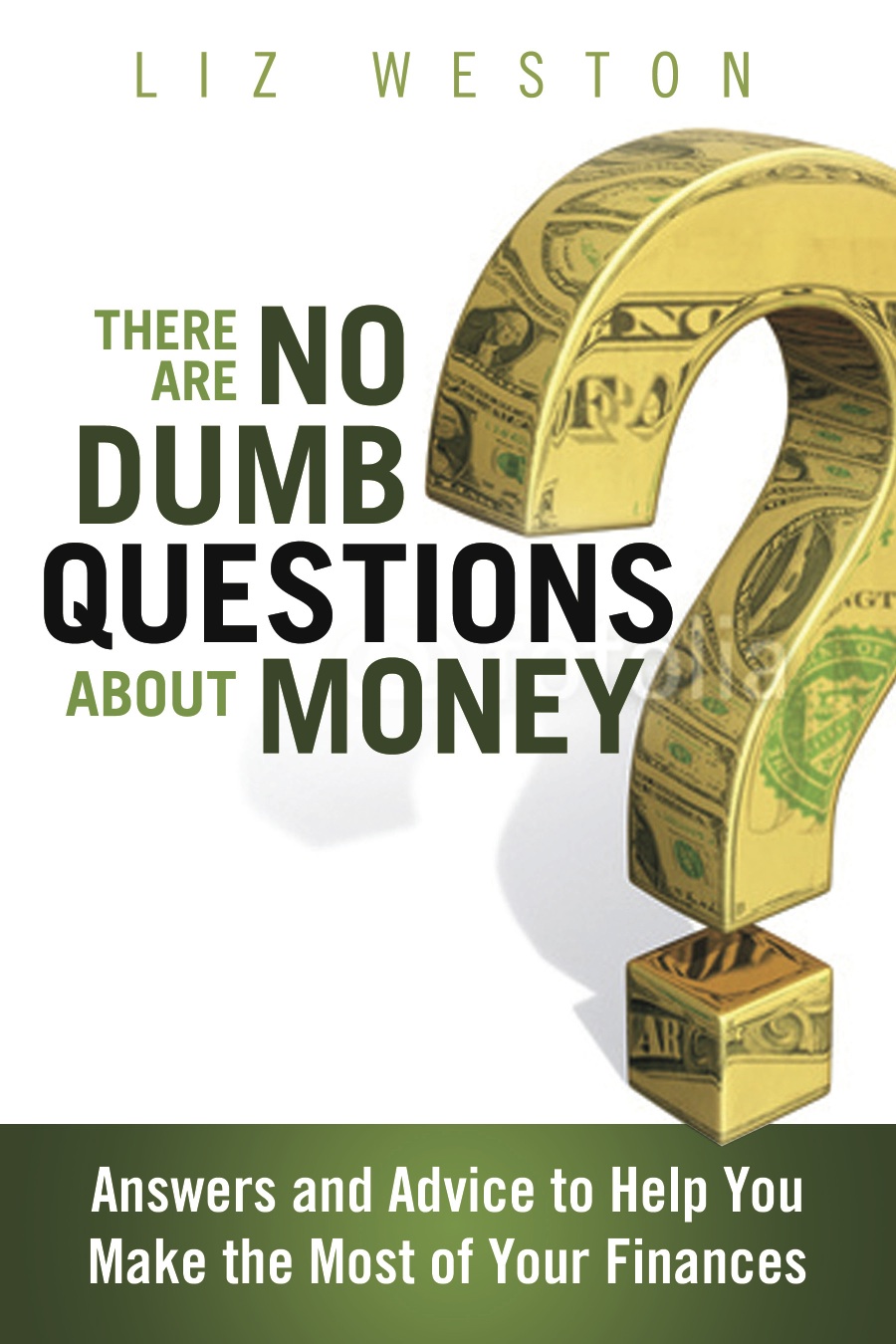
Do you have questions about money? Here’s a secret: we all do, and sometimes finding the right answers can be tough. My new book, “There Are No Dumb Questions About Money,” can make it easier for you to figure out your financial world.

I’ve taken your toughest questions about money and answered them in a clear, easy-to-read format. This book can help you manage your spending, improve your credit and find the best way to pay off debt. It can help you make the right choices when you’re investing, paying for your children’s education and prioritizing your financial goals. I’ve also tackled the difficult, emotional side of money: how to get on the same page with your partner, cope with spendthrift children (or parents!) and talk about end-of-life issues that can be so difficult to discuss. (And if you think your family is dysfunctional about money, read Chapter 5…you’ll either find answers to your problems, or be grateful that your situation isn’t as bad as some of the ones described there!)

Interested? You can buy this ebook on iTunes or on Amazon.

Filed Under: Annuities, Banking, Bankruptcy, Budgeting, College, College Savings, Couples & Money, Credit & Debt, Credit Cards, Credit Counseling, Credit Scoring, Divorce & Money, Elder Care, Estate planning, Financial Advisors, Identity Theft, Insurance, Investing, Kids & Money, Liz's Blog, Real Estate, Retirement, Saving Money, Student Loans, Taxes, The Basics Tagged With: 401(k), banking, Bankruptcy, Budgeting, college costs, College Savings, Credit Bureaus, Credit Cards, Credit Scores, credit scoring, Debts, emergency fund, FICO, FICO scores, financial advice, Financial Planning, foreclosures, Identity Theft, mortgages, Retirement, Savings, Social Security, Student Loans

Pay down low-rate debt or boost savings?

August 27, 2012 By Liz Weston

Dear Liz: I’m not sure whether I should be aggressively paying off the balance of my student loans or saving that money for a down payment for an apartment. I graduated from law school with $150,000 in federal and private loans. Over the last few years I’ve paid off most of that, but I still have about $50,000 in federal loans with a rate fixed at 3.75%. I fully fund my 401(k) each year, have an emergency fund of five months’ bare-bones living expenses and another $35,000 in fairly conservative, mostly liquid investments. I plan to change jobs in the next six to nine months and will likely take somewhat of a pay cut. I am torn right now as to whether I should continue aggressively paying off my loans, since that is a guaranteed 3.75% return on that money, or put the surplus into my investment account, which may earn a better return but also has some risk of losing principal. This would be my down payment money; I live in New York, so I have another five years or so before I could consider buying, and I’m currently single, so changes in my relationship status could change this goal. It would be wonderful to be debt-free, but it would also be comforting to have a bigger balance in my bank account.

Answer: You’ve already done well by fully funding your retirement, paying off those private student loans and building an emergency fund. At this point, you can’t make a truly wrong decision about what to do with your money. What comes next depends on your comfort level.

Many financial planners would advise against paying off that low-rate student debt. If inflation returns, the rate you’re paying could seem incredibly cheap. Also, paying off student debt doesn’t really increase your financial flexibility. It’s not like a line of credit that you can pay down and tap again later. The money you send off to your student lender is gone for good.

On the other hand, you’re not likely to earn a whopping return on money that’s earmarked for a goal within the next five years. If you need money within 10 years, it shouldn’t be in the stock market; if your goal is five years out, most of it should be in shorter-term bonds and cash, such as an FDIC-insured savings account or certificates of deposit with varying maturities. You could decide the guaranteed 3.75% return of paying off the debt is better than the alternative.

Like so much of adult life, the choice is yours. Unlike so much of adult life, you really can’t go wrong whichever path you take.

Filed Under: Credit & Debt, Q&A, Real Estate Tagged With: Down Payment, down payments, emergency savings, federal student loans, private student loans, Savings, savings account, Student Loan, student loan debt, Student Loans

Cash-only lifestyle can complicate getting credit

August 27, 2012 By Liz Weston

Dear Liz: My brother is 63, living on Social Security only and needs to obtain a credit card. He is old school and pays cash for virtually everything, but realizes he needs a credit card for some basics (renting a car, for example). If he has only $17,000 income a year, would that be enough to qualify him for a basic credit card from any provider? If not, do you have any suggestions for emergencies where a credit card would normally be required?

Answer: Some people use debit cards or prepaid cards in situations where credit cards are typically accepted. But gas stations, hotels and some other merchants can put a “block” or hold on an account for more than the amount being charged. That can limit the user’s access to the rest of the money in their checking account or on their prepaid card for several hours or even days. Also, debit and prepaid cards have fewer consumer protections than credit cards.

The biggest problem your brother faces in getting a regular credit card is his habit of paying with cash. He may not have enough of a credit history to generate a credit score, and most card issuers rely heavily on scores in evaluating applications. He should consider visiting MyFico.com and see if he can buy one of his FICO scores for $20. If he doesn’t have FICOs, he may want to consider a secured credit card.

A secured card gives him a credit line equal to a deposit he makes at the issuing bank. NerdWallet, an online financial site that evaluates credit cards, recommends the U.S. Bank Secured Visa Card, which has a low $35 annual fee and security deposits ranging from $300 to a respectable $5,000. Another option is the Capital One Secured Card, which has a lower annual fee of $25 but a credit limit of just $200.

Using a secured card lightly but regularly, and paying off the balance in full every month, can help your brother build credit scores that eventually will be high enough to qualify for a regular card.

Filed Under: Credit & Debt, Credit Scoring, Q&A Tagged With: Credit Cards, Credit Scores, credit scoring, FICO, FICO scores, secured card

  • « Go to Previous Page
  • Page 1
  • Interim pages omitted …
  • Page 25
  • Page 26
  • Page 27
  • Page 28
  • Page 29
  • Page 30
  • Go to Next Page »

Primary Sidebar

Search

Copyright © 2026 · Ask Liz Weston 2.0 On Genesis Framework · WordPress · Log in