• Skip to main content
  • Skip to primary sidebar

Ask Liz Weston

Get smart with your money

  • About
  • Liz’s Books
  • Speaking
  • Disclosure
  • Contact

FICO

Q&A: Account closure caused long-lasting score drop

December 8, 2025 By Liz Weston Leave a Comment

Dear Liz: A reader mentioned recently their credit score dropped only four points after closing a credit card they had since 1981. Three years ago I closed a credit card that was over 30 years old and my credit score dropped 20 to 35 points, depending on the credit reporting bureau. My score hasn’t gone up since despite good credit and no late payments. Please remind readers that many factors go into a credit score when closing a credit card.

Answer: As mentioned in the previous column, the impact of a card closure varies depending on other information in your credit reports. If your scores are high and you have several other open credit cards in good standing, the impact is likely to be minimal. If your scores aren’t great, you have few accounts or you’re closing one of your highest-limit cards, the impact may be greater.

Also keep in mind that there are many different credit scoring formulas in use today, so you don’t have just one credit score: you have dozens. FICO and VantageScore are the two main providers, but lenders use different versions of these scores and, as you’ve noted, the results also vary according to the credit bureau they use.

Your scores constantly change because the underlying information in your credit reports changes. Even if you aren’t actively adding or closing accounts, the balances on your accounts typically change from month to month. Higher balances on credit cards can hurt your scores, while lower balances can help. Each month your accounts get a little older (which is a good thing) and more time has passed since your last account opening (also a good thing).

You can offset the impact of a closure by continuing to handle your accounts responsibly. You also might consider adding a new account to the mix if the point drop is significant enough to affect your financial life. If the score drop took you from the 800s to the high 700s, though, it probably isn’t worth the bother of trying to “fix” it since your scores will typically get you the best rates and terms on any credit you may need.
Filed Under: Credit Cards, Credit Scoring, Q&A Tagged With: closing accounts, closing credit cards, FICO, VantageScore

Q&A: Boosting Credit Scores

March 15, 2021 By Liz Weston

Dear Liz: I’m frustrated with my FICO scores. At one point they were well into the 800s and now they languish in the 720 to 730 range. I have no debt — no mortgage or car loan — and fully pay off two credit cards monthly. I have millions (fact, not bragging) in assets with no liabilities. I don’t anticipate taking any loans but it is so odd to me. Why is this?

Answer: You likely had at least one installment loan, such as a mortgage or car loan, when your scores were near the top of FICO’s typical 300-to-850 scale. You can still have good scores without an installment loan — and you do — but the highest scores require you to have a mix of credit types.

You might be able to add a few points to your scores by paying attention to your credit utilization — the less of your credit limit you use, the better. Adding another card or two may ding your scores in the short run but also could add points long term.

Or you can just be happy as you are. As long as you continue to use your cards responsibly, you’ll continue to have scores that are “pretty enough for all normal purposes” — in other words, that will get you good rates and terms should you decide to apply for additional credit.

Filed Under: Credit Scoring, Q&A Tagged With: Credit Scores, FICO, q&a

Q&A: So many credit scores — here’s how to get yours

May 22, 2017 By Liz Weston

Dear Liz: You recently discussed FICO scores. Please let me know how I can get mine. My bank says it can only give my husband his score because he is the principal on our account.

Answer: Remember that you don’t have one FICO credit score, you have many. Lenders use different versions and generations of the FICO formula. In addition, FICOs will differ based on which credit bureau was used. So your bank may give your husband a FICO Bankcard Score 2 based on information from Experian, while an auto lender might use a FICO Auto Score 5 from Equifax. These scores almost certainly will differ from his FICO 8 scores, which are the most commonly used scores. The FICOs for credit cards and autos typically are on a 250-to-900 scale, while FICO 8 is on a 300-to-850 scale.

Anyone can get free FICO 8 scores based on Experian data from Experian’s consumer site, Freecreditscore.com, and from credit card Discover at Discover.com. Several other credit card issuers — including American Express, Bank of America, Chase, Citi and Wells Fargo — offer FICOs of various kinds to cardholders.

If you want to see a broader range of your FICO scores, you can buy a three-bureau report from MyFico.com for about $60 that includes FICO 8s, FICO 9s and the most commonly used scores in mortgage, credit card and auto lending from each bureau.

Filed Under: Credit Scoring, Q&A Tagged With: Credit Score, FICO, q&a

Bureaus fined for credit score confusion

January 3, 2017 By Liz Weston

51w4H0Y7W7L._SX333_BO1,204,203,200_The Consumer Financial Protection Bureau today ordered Equifax and TransUnion to pay more than $23 million in restitution and fines for deceiving consumers about the usefulness and actual cost of credit scores they sold to consumers. Regulators said the bureaus also lured customers into expensive subscriptions when people thought they were getting free scores.
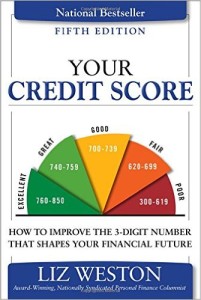
The CFPB said the bureaus were selling scores without making it clear that they weren’t the FICO scores lenders typically use in their decisions. TransUnion was selling VantageScores and Equifax sold a proprietary score. (Important to note here that VantageScores are now offered for free by many sites, including my employer NerdWallet.)

Credit scoring can be complex, and people are easily confused about the different types of scores and how they’re used by lenders. For example, many people think they have one credit score, when in fact we have many, and those scores change all the time.

People often don’t understand that the scores they’re seeing aren’t necessarily the ones used by lenders. Most lenders use some version of the FICO credit scoring formula, but FICOs come in many different versions and iterations. There are different generations of FICO scores and formulas tweaked for different industries, such as credit cards or auto loans. Furthermore, the FICOs you get from one major credit bureau will differ from the FICOs you can get from the two other bureaus.
Before VantageScore, the bureaus often sold proprietary scores that were used by few, if any, lenders. That led consumer advocates to label these proprietary scores as “FAKO” scores. VantageScores definitely aren’t FAKOs, since they’re used by 20 of the 25 largest financial institutions. But they may be used behind the scenes–for marketing or testing, rather than for deciding whether you get a loan or the interest rate you’ll get.
A VantageScores can give you a general idea of how lenders might view you as a credit risk. If you’re in the market for a major loan such as a mortgage or auto loan, however, you should consider buying the appropriate FICOs from MyFICO.com to get the clearest idea of where you stand.

Filed Under: Liz's Blog Tagged With: CFPB, Credit Score, Credit Scores, Equifax, FICO, FICO scores, TransUnion

Q&A: Where to find FICO scores

August 15, 2016 By Liz Weston

Dear Liz: I’m looking to buy a car and I’d like to see the FICO scores that lenders use. I already visited MyFico.com, but I want another site that shows my real FICO scores for auto lending. If you could point me in the right direction, that would be great.

Answer: You were at the right site. When you buy one credit score for $19.95 from MyFico.com, you actually get several scores from the same credit bureau. Those include FICO 8, the most commonly-used score, as well as the FICOs that bureau typically supplies to mortgage, auto and credit card lenders. If you want to see FICOs from all three bureaus, you can buy them for $59.85 and get a total of 25 different scores.

The scores lenders actually use to price your loan may be somewhat higher or lower from the ones you’ll see because credit scores change all the time. But if you apply for a loan shortly after buying your scores, they should be pretty close to the ones you see.

Filed Under: Credit Scoring, Q&A Tagged With: Credit, Credit Scores, FICO, q&a

Monday’s need-to-know money news

July 20, 2015 By Liz Weston

air-miles-cardToday’s top story: How your medical debt impacts your FICO score. Also in the news: Signs your parents are victims of a financial scam, what you need to know when hunting for scholarships, and how to fly first class on the cheap.

The Impact of Medical Debt on FICO Scores
A new formula treats medical debt differently.

5 Signs Your Parents Are the Victims of a Financial Scam
Older adults are more susceptible to scams.

Everything You Need to Know When Hunting for Scholarships
Helping your kids on the road to college.

How to fly first class for free (or on the cheap)
Bargain your way out of coach this summer.

Filed Under: Liz's Blog Tagged With: college, Credit Score, elderly, FICO, financial scams, medical debt, Savings, scholarships, travel

  • Page 1
  • Page 2
  • Page 3
  • Interim pages omitted …
  • Page 12
  • Go to Next Page »

Primary Sidebar

Search

Copyright © 2025 · Ask Liz Weston 2.0 On Genesis Framework · WordPress · Log in