Dear Liz: I have a few questions about my income taxes during my upcoming retirement. I would like to know if doing a Roth IRA conversion will be worth it for me since I might be in a higher tax bracket when I retire. Is there a rule of thumb in regards to doing this […]
Recent Blog Posts
Q&A: Approaching retirement? Don’t count on rules of thumb
Q&A: What to do if you don’t trust your trustee?
Dear Liz: I own several properties. I have a living trust that names my two minor children as beneficiaries. I’ve told my attorney that I want to transfer the properties to my children using the county form. This will give my children who are under 10 years of age ownership as tenants in common with […]
Q&A: Why Social Security imposes an earnings test
Dear Liz: I am under full retirement age, collecting Social Security and working part-time. I just received a letter from Social Security telling me I earned over the $22,320 limit and now have to pay back some of my Social Security. I was aware of the limit, so the letter was not unexpected. What I’m […]
Q&A: Should you keep more than $250,000 in one bank?
Dear Liz: You recently wrote that it’s easier to have one bank than many, but I worry about FDIC insurance limits because I have more than $250,000 in savings. Answer: You may be able to get more coverage at one bank than you think. FDIC insurance is per depositor, per ownership category, per bank. Ownership […]
Q&A: Why living trusts are a good option, most of the time
Dear Liz: My goal is to avoid probate and allow simplified access for my heir, who is also my executor. I have no family. I have chosen payable-on-death and transfer-on-death accounts instead of putting all financial assets in my trust, against the wishes of the attorney who drew up the trust for my condo. I […]
Q&A: Widow may be eligible for home sale tax relief
Dear Liz: My late husband and I bought my present home in 1969. I am now 80. From what I understand, my widowed status does not make any difference in regard to the home sale exemption. His death means that when I want or need to sell the house, I lose out on half the […]
Books
Some of the links below are affiliate links. This means if you click on the link and purchase the item, I will receive an affiliate commission.
-
Your Credit Score: How to Improve the 3-Digit Number that Shapes Your Financial Future (5th edition)
Improve your credit score, for real, with the #1 best-selling guide you can trust! Today, a good credit score is essential for getting credit, getting a job, even getting car insurance or a cellphone. Now, best selling journalist Liz Pulliam Weston has thoroughly updated her top-selling guide to credit scores, with crucial new information for protecting (or rebuilding) yours.
-
Deal with Your Debt: Free Yourself from What You Owe
Struggling with debt? Get realistic help that's actually useful.
In this extensively updated guide, you can discover how to control and manage debt effectively. You'll learn which debts can actually help build wealth over time, and which are simply toxic. You'll find up-to-date, real-world strategies for assessing and paying off debt, money-saving insights on which debts to tackle first, and crucial information about everything from debt consolidation loans to credit scores and credit counseling. Weston offers practical guidelines for assessing how much debt is safe -- and compassionate, realistic guidance if you've gone beyond the safety zone. If you've ever worried about debt, you'll find the new edition of Deal with Your Debt absolutely indispensable.
-
There Are No Dumb Questions About Money: Answers and Advice to Help You Make the Most of Your Finances
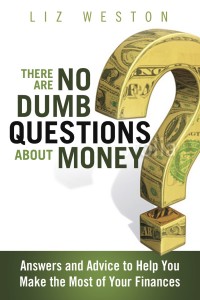
There’s a myth in our society that some people are just naturally “good” with money. So naturally, everybody else must be “bad”--or at least, dumb--if they’re not sure what to do.
The reality is, no one is born a money expert. Those who are “good” with money had to learn: by reading, asking questions, and consulting people who know more than they do. No one knows everything, and the only dumb questions are the ones you don’t ask.
This collection of money questions and answers can help you solve your most pressing concerns about your finances. You can buy this ebook on iTunes or on Amazon.
-
The 10 Commandments of Money: Survive and Thrive in the New Economy
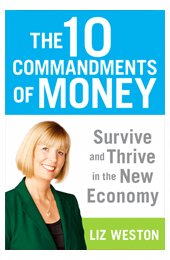
From the #1 personal finance columnist on the Internet (Nielsen/NetRatings)-a clear prescription for financial health in the 2010s and beyond.
For previous generations, living within your means was a simple formula. Now, with the staggering rise in education, health care, and housing costs, millions of people find themselves skating from paycheck to paycheck with no idea how to move forward.
As the most-read personal finance columnist on the Internet, Liz Weston has heard the questions and has the answers. Her 10 Commandments of Money will help readers avoid critical mistakes, survive the bad times, and thrive in the good ones.
-
Easy Money: How to Simplify Your Finances and Get What You Want Out of Life
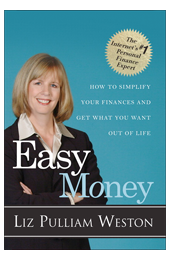
Common sense. Easy solutions. Plain English.
Best selling author, Liz Weston, takes on the problem everyone has, and nobody talks about: the sheer hassle of managing your money! Weston offers practical guidance and easy checklists for every decision: investments, credit cards, insurance, mortgages, retirement, college savings, and more! Discover how to consolidate, delegate, and automate your finances…save time and money…and live a more rewarding, secure life!